 World Traveller 73
Getting Close to Active Volcanoes on the Crater Rim Trail: Visiting Hawaii Volcanoes National Park, Hawaii, USA


The Big Island of Hawaii is home to the Hawaii Volcanoes National Park. It’s a place where you can get up close to the volcanoes as safely as possible, and to marvel in the wonders of millions of years of layers upon layers of sentiment added to each layer as a result of volcanic eruptions. A visit to the Hawaii Volcanoes National Park is well worth part of holiday time.
This post is one chapter on my trip to the Big Island of Hawaii, United States of America. This trip was enhanced through Marriott Bonvoy Elite Status, Alaska Airlines Mileage Plan and Hertz Gold Plus Rewards. For more information on how this trip was booked, please see our trip introduction. For other parts of the trip, please see this index.
If you enjoyed this post, please follow us here or on social media through Facebook, Twitter “X” or Instagram for more travel tips and hacks on how to “Upgrade Your Travels”.
✈️ Read more from this trip:
- Introduction: Hawaii Five – Oh. A Fiftieth Birthday in Kona, Hawaii, USA via Alaska Airlines First Class
- Alaska Airlines First Class: Bellingham – Seattle
- Alaska Airlines First Class: Seattle – Kona
- My Experience Renting with Hertz President’s Circle: Kona, Hawaii, USA
- The Westin Hapuna Beach Resort, Kona, Hawaii, USA
- Climbing in Hawaii’s Volcano National Park, Big Island, Hawaii, USA
- Exploring Nāhuku Lava Tubes, Hawaii Volcano National Park, Big Island, Hawaii, USA
- Restaurant Review: Café Pesto, Hilo, Hawaii, USA
- Restaurant Review: ‘ULU Ocean Grill, Four Seasons Hualalai, Kona, Hawaii, USA
- From Sea Level to 13,845 feet: Driving Up to Hawaii’s Big Island Observatories
- Swimming with Manta’s: The Big Islands’s Manta Rays up Close
- Alaska Airlines First Class: Kona – Seattle
- Alaska Airlines First Class: Seattle – Bellingham
Getting Close to Active Volcanoes on Crater Rim Trail: Visiting Hawaii Volcanoes National Park, Hawaii, United States of America
The Big Island of Hawaii is known for having one of the world’s most active volcanoes in the southern part of the Island. It has experienced regular eruptions over the last thirty years. When the volcano is not actively erupting, the volcanoes can be visited through a visit to the Hawaii Volcanoes National Park.
About Hawaii Volcanoes National Park:
The Hawaii Volcanoes National Park aims to educate about the two large volcanoes in Hawaii; the Kīlauea and Mauna Loa Volcanoes. Each of these volcanoes are among the most active in the world and still add land to the Island of Hawaii. The Mauna Loa Volcano is earth’s most massive mountain, with an estimated volume of 19,000 cubic miles. The park itself showcases the results of seventy million years of volcanism, migration and evolution in the Hawaiian Island’s Emperor Seamount Chain.
With all of this wonder, a visit to the Hawaii Volcanoes National Park is likely to be a highlight of your trip to the Big Island. If you are an outdoor’s person, make sure that you give the park enough time on your journey to the Big Island, as there are plenty of features in the park that are well worth exploring without being rushed.
Getting to Hawaii Volcanoes National Park:
The Hawaii Volcanoes National Park is located on the south side of the island. It is quite a distance from the tourist resorts on the West Coast of the Big Island. We started off from The Westin Hapuna Beach Resort and it took us well over two hours to get there. This is unlike the driving time to many other nearby tourist attractions.
If you are travelling to the Hawaii Volcanoes National Park, make sure you plan to leave early to allow for a full day of exploring at the park. There is more than enough there to spend several days worth of sight seeing so you won’t run out of things to do.
The Sulphur Springs Walk:
On arrival to Hawaii Volcanoes National Park, we paid the entry free for the park. The fee during our visit was $30 USD and valid for seven days of entry.
We parked at the Kīlauea Visitor Centre Parking Lot where we got oriented and situated on the park’s activities. We checked out the map in order to plan the day’s walking activities.

From the Kīlauea Visitor Centre, we set out on the Sulphur Banks Trail. The trail was recommended as one of the sights to see for those on a day visit. The Sulphur Springs Trail was an easy and mostly level walk from the Visitors Centre.
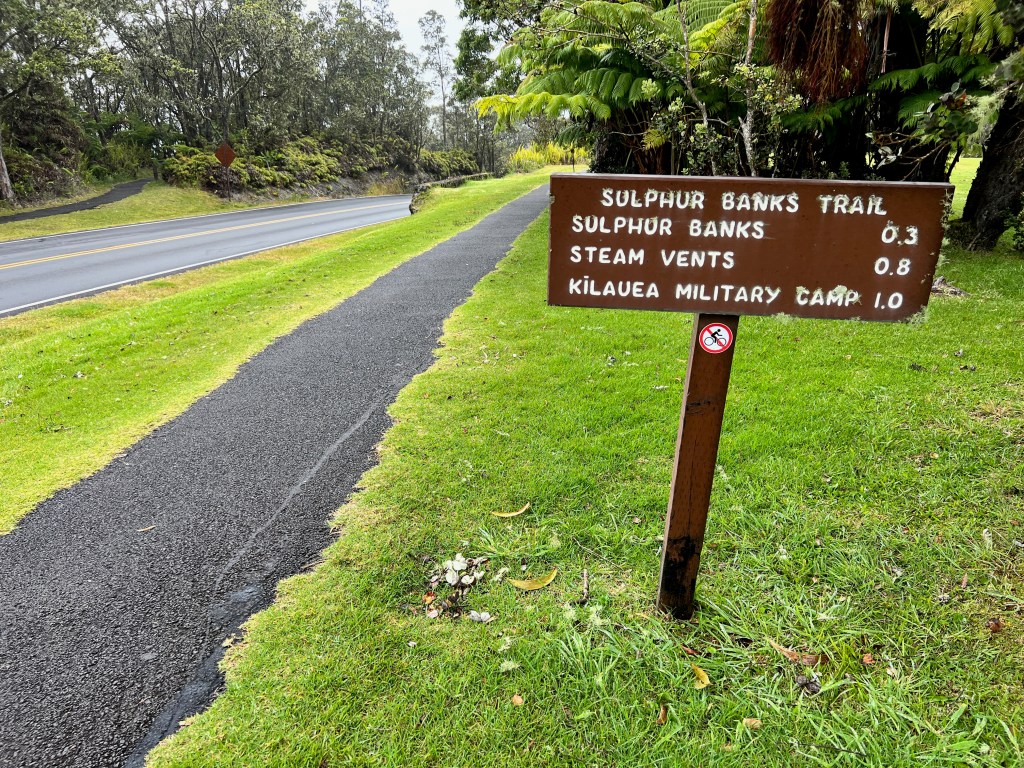

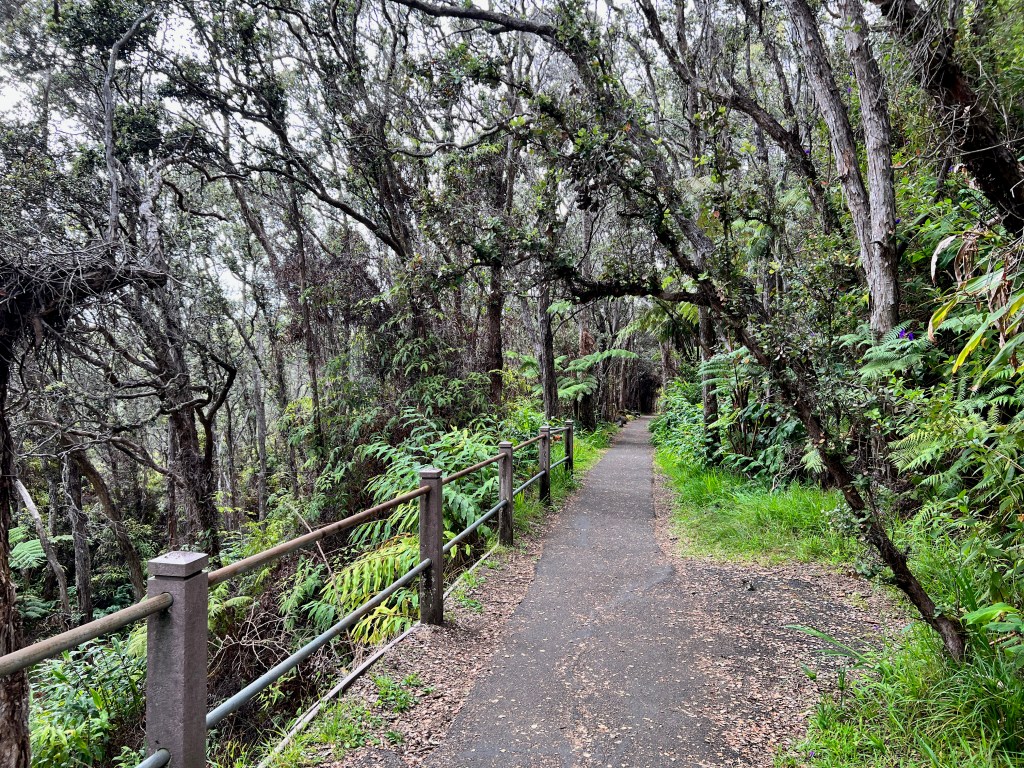
The walk descended a little in elevation and provided the usual warning signs for being cautious around sulphuric fumes. The walkway allowed for a good feel of the vegetation and fauna for this part of the world. The walk was a pleasant way to start an introduction to Hawaii Volcanoes National Park.

The walkway led us down to a small valley with sulphuric fumes. The fumes were exiting the ground as a result of the nearby volcanic activity. The area was surrounded by wooden boardwalks, allowing travellers the opportunity to visit the area without having their feet pass through the soft ground surrounding the fumes.

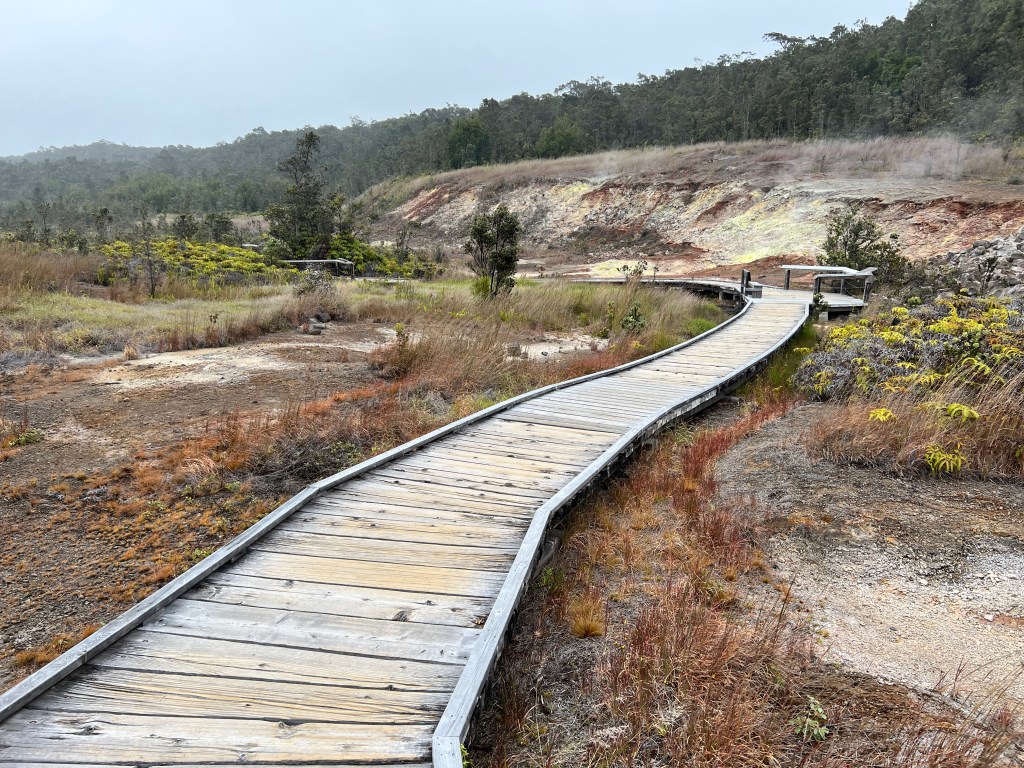

The sulphur springs trail is probably the easiest and shortest walk from the Visitor’s Centre. It’s a near perfect walk to complete with children due to its short length, although admittedly it doesn’t have volcano views.
Walking the Crater Rim Trail:
From the Sulphur Banks Trail, we continued on our walk to the Crater Rim Trail. This was accomplished from continuing to walk the length of the Sulphur Banks Trail, by crossing the road and following the pathways on the other side. The pathways are fairly well marked, so there isn’t much likelihood of getting lost provided you stick to the trails.
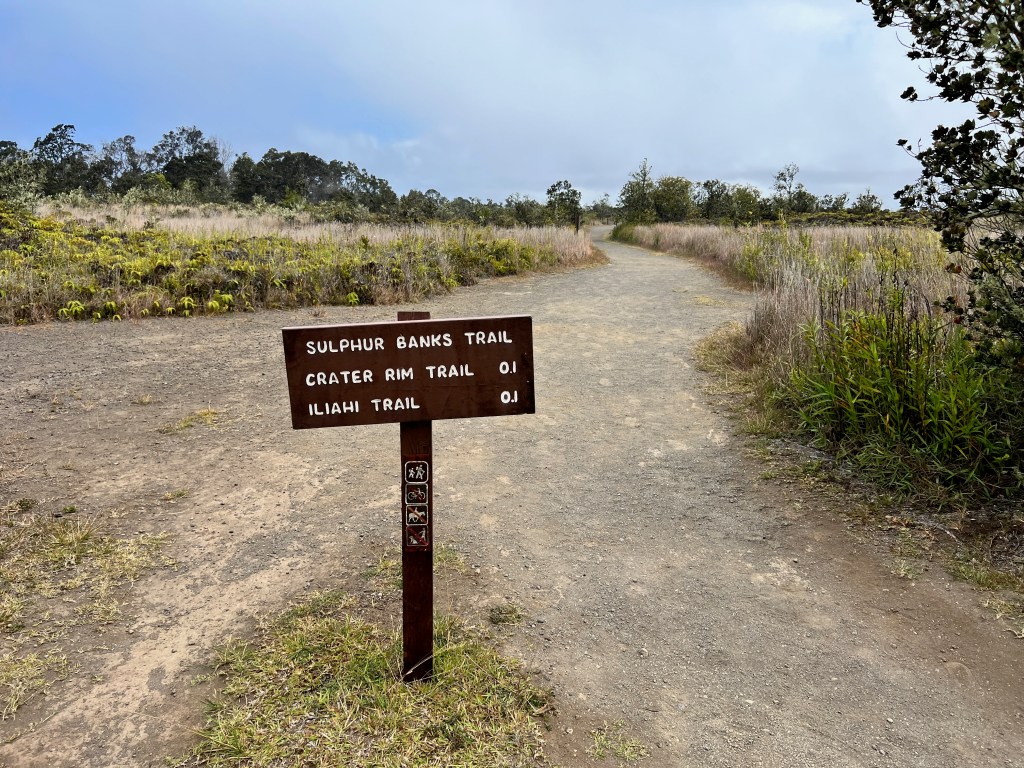
The Crater Rim Trail followed the length of the Kaluapele (Kīlauea Caldera) Volcano Rim. The trail allowed for visitors to see a large portion of the volcanic crater from high above in a really beautiful and unique setting. The first part of the trail has views over lava flows that occurred before the year 1924, with views of lava flows from 1982 in the far distance.

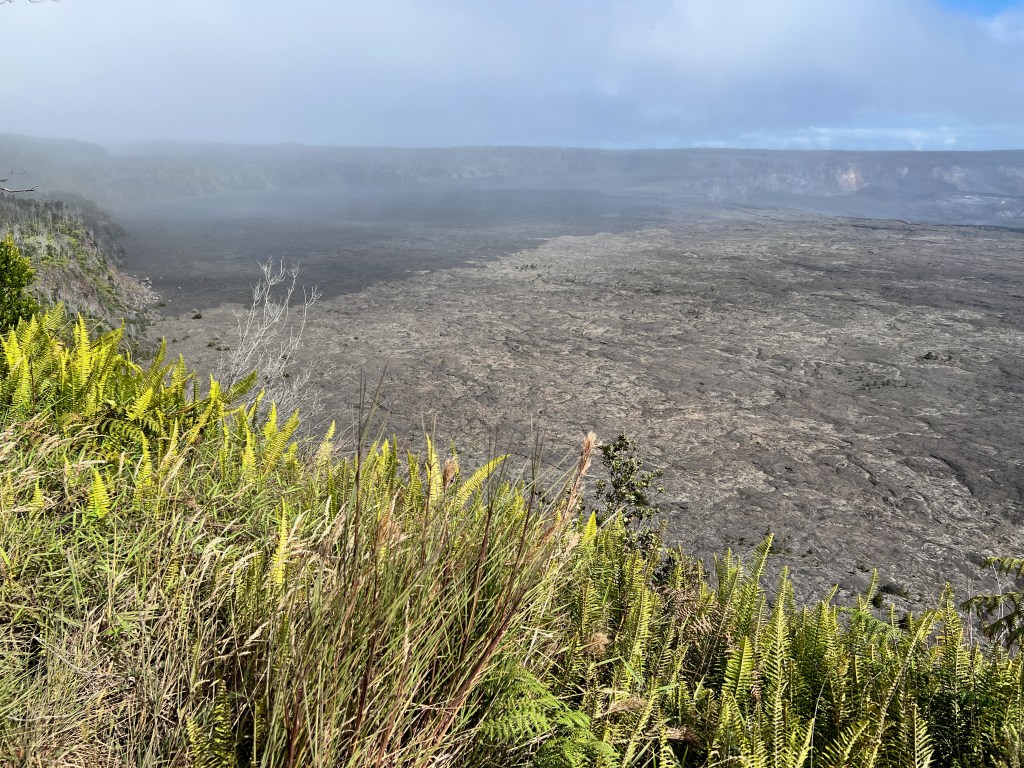
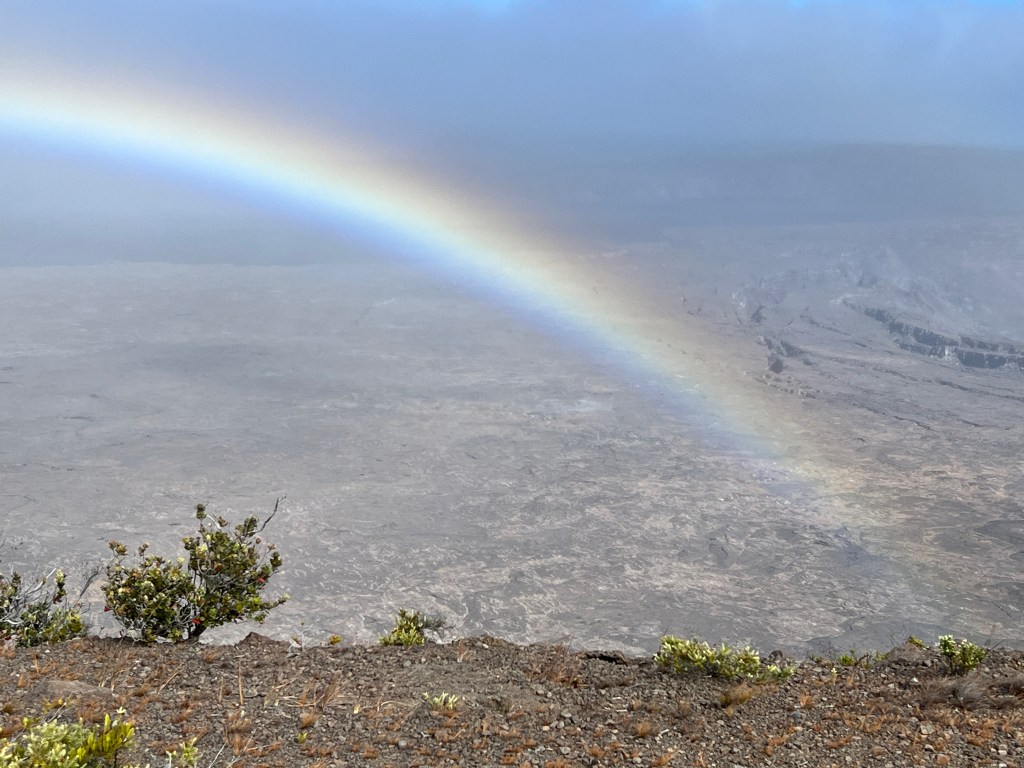
During our time there, we had a rainbow make an appearance in the volcanic crater itself. This was a pretty special event given the odd nature of the volcanic crater and caldera. It’s no secret that the State of Hawaii has a rainbow on it’s automobile licence plates, so it was a unique perspective to get to see a rainbow from such a high elevation looking down.



We continued our Crater Rim Trail Walk for about an hour. We eventually came to the Kīlauea Overlook with views over the Halema’una’u Crater, which was more active. The Halema’una’u Crater had water accumulating inside it, which made for a very active looking volcanic experience despite it being from a far.

For those that are not into outdoors and walking, it is worth mentioning that this viewpoint is also accessible by vehicle by driving along the Crater Rim Drive West.Accessing it by car is better for those that are pressed for time or for those that want to see every sight as possible in the park.

After spending time at the caldera, we ended up completing the return walk back the way we came on the Crater Rim Trail. It was about three hours of walking by the time we made it back to the Visitor Centre. We experienced a whole series of views throughout this time along the trail, with a variety of weather patterns floating through the area during our time there.

After the Crater Rim Trail, we went on to the excellent Nāhuku Lava Tubes, before heading onto Café Pesto Hilo Bay Restaurant in Hilo for dinner and then back to The Westin Hapuna Beach Resort for the night.
My Thoughts on Visiting Hawaii Volcanoes National Park:
The Sulphur Springs Walk and the Crater Rim Trail were two excellent introductions to the Hawaii Volcanoes National Park. Both were easily tackled during a day visit.
We got to see a variety of weather and interesting geography patterns based on our time within the park. If you’re visiting, I would make sure that you allow yourself enough time to get out to the park, as it’s quite a drive from the West Coast Resorts on the Big Island of Hawaii.





Recent Comments